PARTICIPANTS OF THE SUSTAINABLE GRADUATION STRATEGY AFFIRM THAT ESCAPING POVERTY IS POSSIBLE
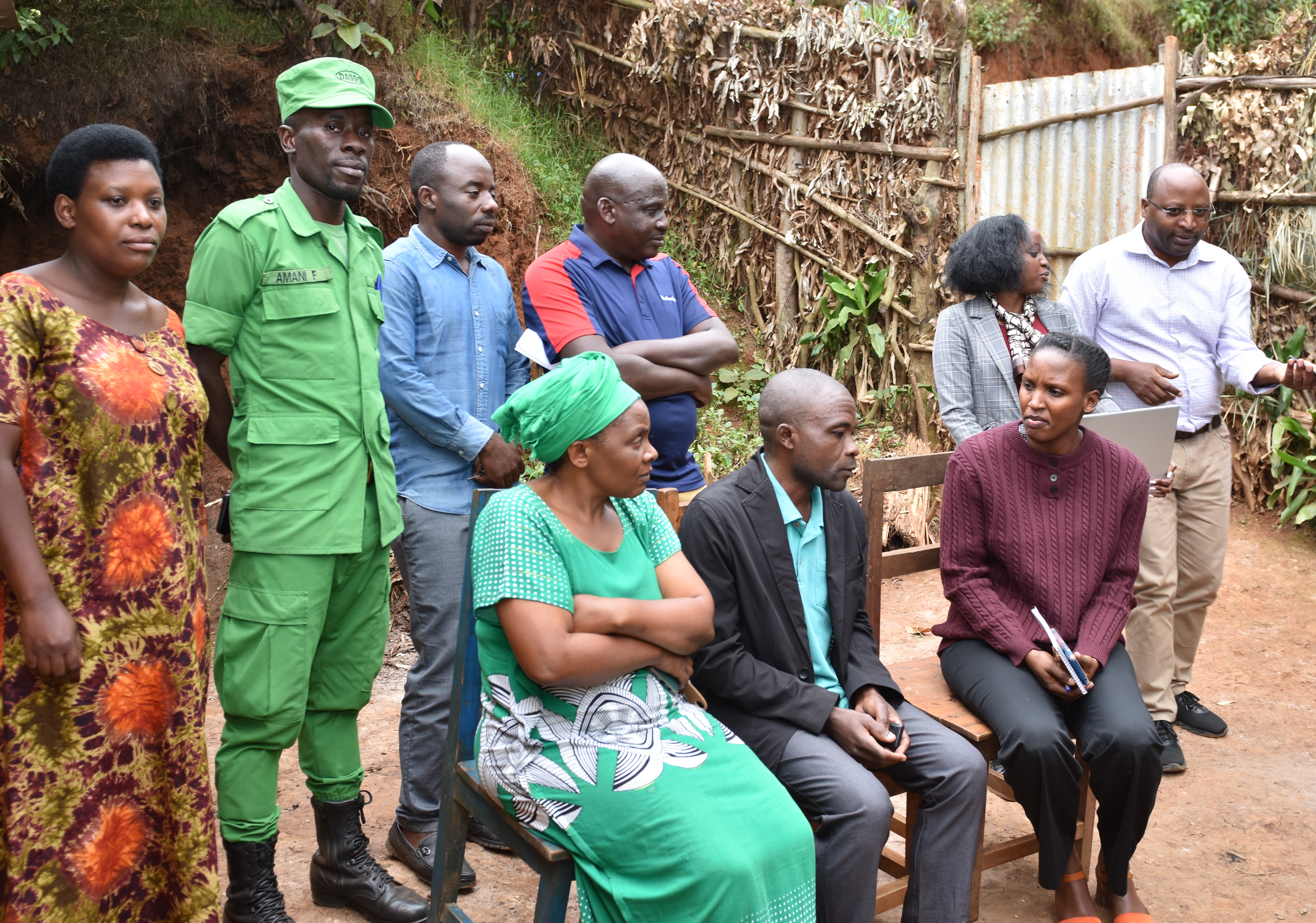
Some citizens participating in the National Strategy for Sustainable Graduation (NSSG) affirm that escaping poverty is achievable, especially when one undergoes a mindset transformation.
Between June 23rd and June 27th, 2025, the Local Administrative Entities Development Agency (LODA), in collaboration with the Ministry of Local Government (MINALOC), conducted an assessment of the progress of the Sustainable Graduation strategy in 20 selected districts.
The assessment focused on the functioning of graduation committees at the district, sector, and cell levels, as well as the collaboration between these committees and Para Social Workers and the contribution of Civil Society Organizations (CSOs) in supporting citizens to sustainably graduate from poverty.
Additionally, home visits were conducted to meet with beneficiaries of the graduation program and to gather their personal testimonies on their journey out of poverty.
Overall, citizens expressed confidence that escaping poverty is possible, but emphasized that the first crucial step is a change in mindset. They noted that individuals must be willing to actively engage in their journey out of poverty and make good use of the support provided to them.
One example is Emmanuel Ndayisenga, a resident of Rwesero Village, Rwesero Cell, Kagano Sector, in Nyamasheke District.
Ndayisenga shared that his family once lived in extreme poverty but that he was able to access employment through the Vision Umurenge Program (VUP), earning wages of ten thousand Rwandan Francs every 10 days. These earnings helped him provide food for his household while also saving some money, which he used to purchase a pig for livestock farming.
He further explained that he later received additional support from World Vision, which enabled him to buy another pig. With two pigs, he began livestock farming, and when the pigs gave birth, he sold the piglets and used the proceeds to buy a cow worth 500,000 Rwandan Francs. This cow has since calved twice.
Today, Ndayisenga proudly shares that his household has managed to access electricity and clean water, and he is now working towards renovating his family’s home.
“Escaping poverty is not difficult unless someone is not only poor financially but also mentally closed off. But when a person opens their mind and make good use of the smallest support, getting out of poverty is very achievable. My advice is for people to wisely use the little support they receive by purchasing small livestock, and step by step, they can lift themselves out of poverty” he stated.

He adds, “I personally feel that I could graduate and give room for others still in need, because there are many who are behind me and also need assistance to escape poverty.”
In Ndayisenga’s household today, there are two cows, three goats, two sheep, and two pigs. He and his wife also run a small business producing banana juice and local brew, made from bananas they purchase and process for sale.
Another testimony comes from Venuste Nsengiyumva, a resident of Nyankumbira Village, Bugarura Cell, Nkombo Sector, in Rusizi District. He received a VUP loan of 100,000 Rwandan Francs, which he used to purchase goats and pigs, as well as to renovate his home by installing a new iron sheet roof.
He also received support from Compassion International, which helped him acquire more small livestock. Currently, he engages in fishing on Lake Kivu, using part of the funds he received.
Nsengiyumva acknowledges that while he has not yet fully graduated from poverty, he has made significant progress thanks to the assistance provided.

“I have come a long way, and I have reached this point because of the support I received. I wish I could access a larger loan, around 500,000 Francs, so I could launch a more advanced project that would allow me to fully escape poverty” he says.
Local government authorities affirm that the journey to support citizens in sustainably escaping poverty is possible, but emphasize that it requires the collective effort of all stakeholders involved.
Some of the challenges identified in the program include cases where some Civil Society Organizations select beneficiaries without considering the official graduation list, which sometimes leads to support being given to people who are already relatively better off instead of those who are most in need.There are also instances where government projects providing temporary jobs do not prioritize graduation program beneficiaries, who are often the poorest.
Another challenge lies in the high number of households that each Para Social Worker must follow up on, making it difficult for one Para Social Worker to provide adequate support and close monitoring for all assigned families.