Directors of One Stop Centre and BDEUs trained on RUDP reporting
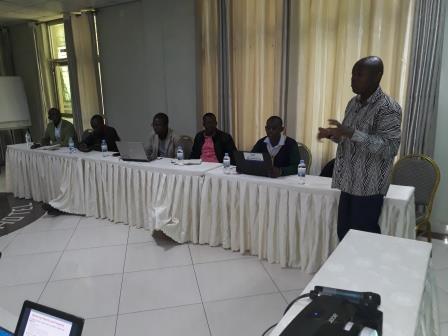
From 25th to 26th January 2018 at CLASSIC Hotel, Kigali was held a two day training workshop on data collection methodology for reporting on Rwanda Urbanization Development Project (RUPD). Organized by Local Administrative Entities Development Agency (LODA), the training is aimed at instilling the M&E framework into Directors of One Stop Centre and BDEUs from the six secondary cities and the City of Kigali (CoK) where RUDP is being implemented. RUDP is an urban infrastructure project initiated to transform the economic geography of Rwanda by facilitating urbanization and promoting secondary cities, and to improve urban management in order to deliver basic services and promote local economic development 6 secondary cities and the CoK. Launched in September 2017, the project is financed by the WB and is being implemented by the Districts of Nyagatare, Muhanga, Huye, Rusizi, Rubavu, Musanze and Nyarugenge, under the oversight of LODA, Rwanda Housing Authority (RHA) and the Ministry of Infrastructure (MININFRA). The project funding equals to 100 USD million debt from the WB to the GoR and is dispatched as follows:
  • Components 1: Improving urban infrastructure and management in secondary cities (USD 80M)
  • Component 2: Modeling Urban Upgrading (Nyarugenge, Kigali) (USD 10M)
  • Component 3: Technical Assistance for Sustainable Urban Management (USD 3M)
  • Component 4: Project management (USD 2M)
  • Other cost: Resettlement compensation and safeguards (USD 5M)
Mr. NDUMWAMI Justin, Local Economic Development Coach at LODA, stated that the end of the training, participants are expected to have a clear picture on RUDP interventions, increased the knowledge in the reporting system and data collection of RUDP M&E framework, shared experiences and challenges in the implementation of RUDP, agreed on the templates for tracking new businesses in the six secondary cities and the City of Kigali, and got information on the project identified for the RUDP Phase 2. After getting an overview of RUDP, participants delved into the progress status of the project across the Districts where road and drainage construction works (Phase One) are on-going. Further, they concentrated on project indicators on which they shall be reporting. These include: Number of people in urban areas provided with access to all-season roads within 500 meter range under RUDP, Land area provided with drainage services financed under the project, Share of maintenance expenditures of District budget, Direct project beneficiaries, Female beneficiaries, Urban roads rehabilitated or constructed (km), Standalone drains constructed or rehabilitated under the project (km), Unplanned settlement area upgraded (ha), District system for tracking business activity operational (Text), Districts use GIS in planning and decision-making, District infrastructure management application for road and drainage assets operational, Participants in consultation activities during project prioritization and planning, Participants in consultation activities during project implementation/female. The training culminated into an exchange of experience and views on arising issues throughout RUDP implementation across the secondary cities and CoK.
Back