LODA AND PARTNERS LAUNCH NEW TEACHING GUIDE FOR ECD CAREGIVERS
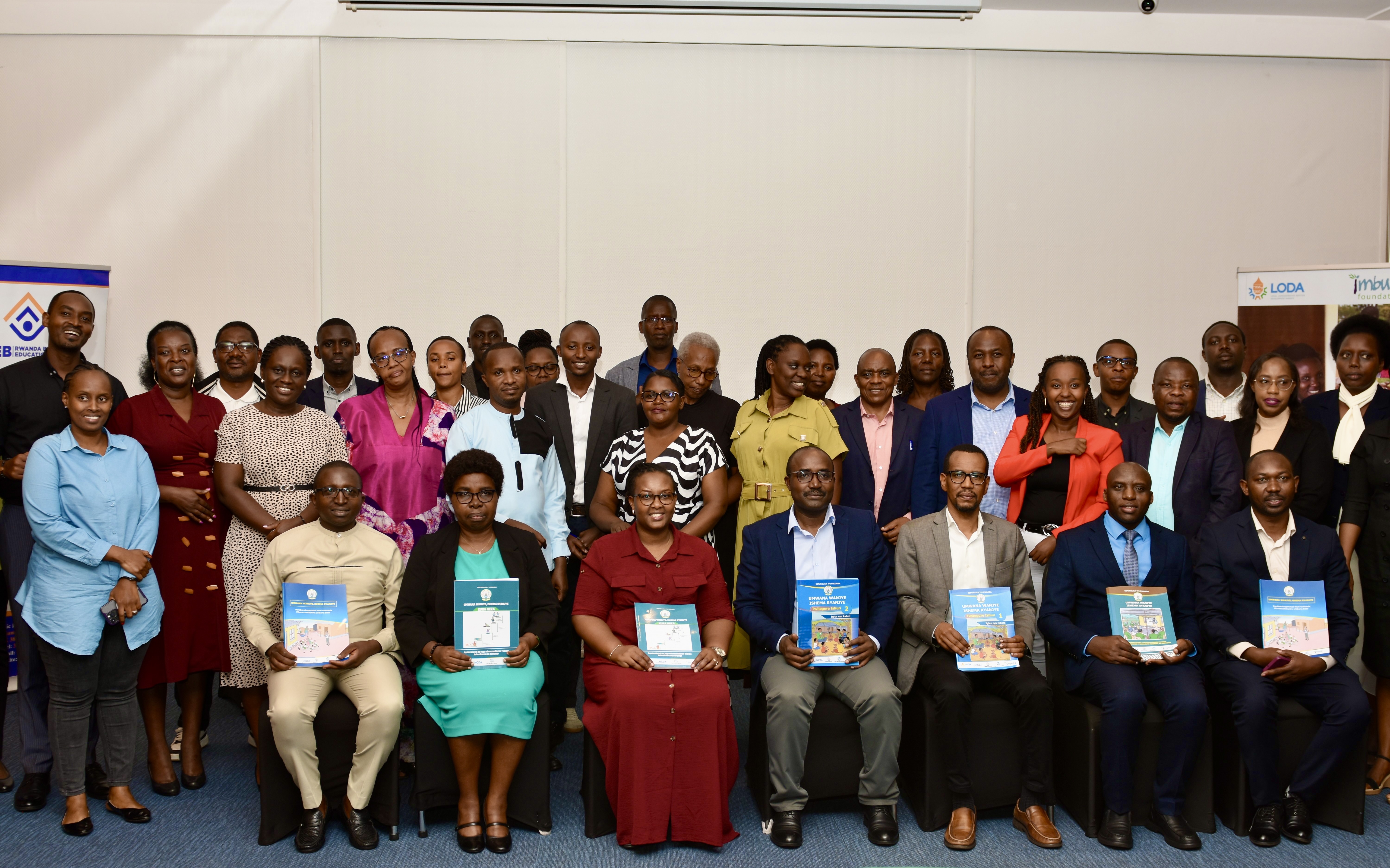
In a significant milestone for early childhood education in Rwanda, the Local Administrative Entities Development Agency (LODA), in collaboration with Imbuto Foundation, World Bank, Rwanda Basic Education Board (REB), National Child Development Agency (NCDA) and other key stakeholders, has launched a new teaching guide designed for caregivers in VUP Home-Based Early Childhood Development (ECD) centers.
This initiative aims to bridge the educational gap for children enrolled in these centers, ensuring they receive both developmental care and foundational academic knowledge before transitioning to primary school.

This guide is in Kinyarwanda, making it easier for caregivers to implement the learning modules effectively.
Home-based ECD centers were established to support children from vulnerable households whose parents participate in the Vision Umurenge Program (VUP). These children were often left at home without proper supervision, prompting LODA to introduce the concept of bringing them together under the care of a designated caregiver within the community.
While these centers have successfully provided critical nutrition, hygiene and protection services, studies indicated that educational preparedness was lacking. The new guide directly addresses this issue by incorporating structured learning modules that prepare children for primary education.

Speaking at the launch, Elodie Shami, Director General of Imbuto Foundation, expressed her appreciation for the partnership with LODA and the World Bank, which entrusted Imbuto Foundation with leading the development of this crucial resource. She emphasized that the guide is designed to empower caregivers with the knowledge and tools needed to provide essential early learning experiences for children in home-based ECDs.

Jean de Dieu Nabimana, Acting Program Manager for EP&SPTP at LODA, explained the origins of home-based ECDs and their impact. A survey conducted on the effectiveness of these centers showed that children from home-based ECDs performed as well as, or even better than, those from school-based ECDs when they entered primary school. “The important thing was that a child could leave the ECD with basic knowledge. Amazingly, we found that some children who graduated from home-based ECDs performed even better in primary school than those from school-based centers,” he said.
However, Mr. Nabimana also highlighted key challenges, particularly sustainability. There is an ongoing effort to mobilize parents to contribute small amounts towards maintaining these centers, ensuring consistent access to essentials like food. He also noted that budget constraints prevent the hiring of professional caregivers. To address this, LODA and its partners are revising home-based ECD guidelines to ensure that at least one or two caregivers per center have basic literacy skills.

Mireille Batamuliza, Permanent Secretary at the Ministry of Gender and Family Promotion (MIGEPROF), commended LODA, Imbuto Foundation, and other partners for their tireless efforts in developing this guide. She emphasized the importance of ensuring quality education in ECDs. “We are pleased that over 80% of children eligible for ECDs are enrolled. However, we must ask ourselves: are we providing them with the knowledge they truly need? This guide ensures that children receive the foundational skills necessary for a smooth transition into primary school”, she said.
Furthermore, Batamuriza called upon all ECD partners to work together to distribute the teaching guide widely, ensuring that it reaches caregivers as soon as possible.
Rwanda currently has 31,000 ECD centers, with over 20,000 of them being home-based. The rollout of this teaching guide will be a game-changer in improving the quality of education and care provided to children in these centers.
As Rwanda continues to strengthen its early childhood development policies, the collaborative efforts of LODA, Imbuto Foundation and other partners remain crucial in ensuring that every child, regardless of their background, receives the best possible start in life.