RUDP undergoes Mid-Term Review
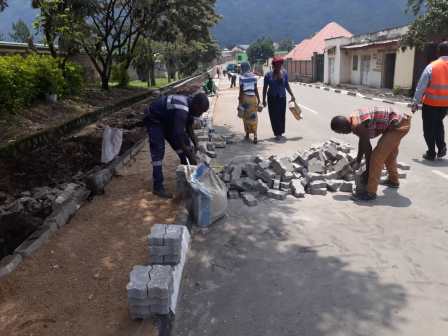
On the eve of construction work completion of asphalt roads and standalone drainages in Secondary Cities as well as unplanned settlement in Agatare Cell in Nyarugenge District, City of Kigali (CoK), two teams made of delegates from the World Bank (WB), Ministry of Infrastructure (MININFRA), Local Administrative Entities Development Agency (LODA), Rwanda Housing Authority (RHA), the City of Kigali (CoK) and the six Secondary Cities embarked on a periodical project site visit focused on Rwanda Urban Development Project (RUDP) from 18th to 21st September 2018. The first phase of the project was launched in 2016 following the GoR and the WB funding agreement on 95 million USD loan which became effective on 5th July 2016.
While on site visit to witness the progress of works (Musanze: 4.577 Km roads and 0,922 Km standalone drainages; Rubavu: 3.894 Km roads and 1.175 Km standalone drainages; Rusizi: 4,632 Km roads and 0,451 Km standalone drainages, Muhanga: 4,886 Km roads and standalone 0,966 Km drainages; Huye: 4,336 Km roads and 3,126 Km standalone drainages, as well as Nyagatare: 3.908 Km roads and 2.203 Km standalone drainages; plus Agatare Informal Settlement Upgrading Project currently starting up, it was found out that all the visited Secondary Cities completed construction works and were making final site cleaning except Musanze and Rubavu which encountered minor delaying challenges related to topographic features and heavy rain seasons.
Commenting on the work done so far and subsequent challenges, Dr. Narae Choi, Task Team Leader (TTL) and Urban Specialist from the WB said: “We’ve seen roads almost complete and drainages done in most cities […] and I really appreciate the hard work put in by the Government of Rwanda also the Consultants and the Contractors. I know there have been many challenges including heavy rains, unforeseen bedrock and marshlands, which actually lasted longer than usual; and also this is probably the first time that the district implemented roads and drainage an civil work package of this scale _this amount_ and of course it’s also challenging to do it for the first time. We’ve learnt a lot along the way in terms of proper contract management and quality assurance of civil works, and also building the working relationship between the Central Government and District as a client […]. One of the challenges we had was the sub quality designs … they were not reflecting the reality on ground in terms of soil conditions and terrain, we had even many missing drainage outlets which we had to redesign with some cost implications”.
Mrs. Helene Carlsson Rex, the regional Programme Leader in charge of Sustainable Development at the WB who managed to reach Agatare Cell, Nyarugenge and Nyagatare District, expressed her satisfaction in these terms: “I appreciate the opportunity to see what has been done on ground, it’s a very good job of upgrading the roads and drainages. This is very important for the secondary city in order to make it more livable but also to attract investment and movements. So I see a lot of good progress and I encourage the team to keep that up”.
As piece of advice, she highlighted investment prioritization and more fund mobilization in the urbanization process. “I think going forward what would be important probably if there are challenges is to prioritize what kind of investment you want to do, because there is a long list of investments the District and the City would like but there is only a certain amount of money that is available. I think it is important to really think through all other pros and cons of different investments, how you can leverage other projects, other funding you have and pick the ones that are most important at this time, and then think about other investments that can come a bit later”, she said.
In his address to Nyagatare District authorities, the WB delegation and other stakeholders, Hon. Cyriaque HARERIMANA, Minister of State in charge of Social Economic Development, commended the WB for its support and appreciated its good partnership with LODA as custodian of socio-economic transformation at grassroots level. “RUDP is good trigger to all the best that is coming in terms of urbanization. Infrastructure development starts with good planning”, he said. To the District, engineers, managers of public utilities and other involved parties in the construction of roads and standalone drainages, he advised to avoid unnecessary delays by sitting together, talk of all underlying issues and sort them out and come to results as per planned timeline.
This exercise was covered in a two day mid-term review workshop from 24th to 25th September 2018 to make a flashback to achievements, encountered challenges and measures taken to overcome them throughout the implementation of the second phase of RUDP. Most of the recommendations put forward turned around improving on contract management, timely procurement, as well as efficient and effective communication between all involved parties and stakeholders.
Back